




Foundation damage can lead to structural problems and significant costs in the event of a disaster. When potential foundation damage is detected, it is essential to have it inspected by a qualified professional. An accurate assessment of the damage will help determine its underlying cause and develop an appropriate repair plan. Having an expert inspect the foundation is also helpful before undertaking any repair work.
In this article, we’ll examine the main types of foundation damage and their causes, while highlighting the importance of conducting the necessary inspections to resolve insurance claims.
The Role of Our Experts: Post-Disaster Investigation
A house fire can cause considerable damage to the structure and its foundation. In addition to damage from heat, smoke, and flames, the foundation itself may sustain damage that could compromise its integrity. For this reason, it is imperative to verify whether the foundation has been compromised by heat or firefighting efforts.
Did you know that following a fire, an expert can assist you in determining whether the foundation of a residential building can be reused to rebuild a home identical to the one that burned down? At this stage, it is also important to distinguish between damage caused by the fire itself and mechanical damage that could result, for example, from demolition work. Collaboration with qualified professional’s is essential for assessing and repairing the damage, thereby ensuring the building’s stability and durability.
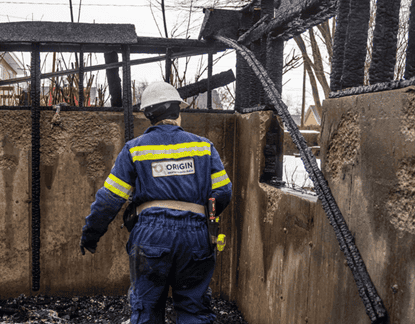
Foundations play a crucial role in the construction of a home, as they form the essential base upon which the structure rests. It is therefore vital to identify issues that could compromise their integrity in order to prevent further damage or major structural problems. Damage to the foundation can also lead to water infiltration, cracks, and other complications that must be addressed. In the next section, we’ll cover the basics of some of these complications.
Cracks and Water Infiltration: Common Examples of Foundation Damage
Appearance of Cracks:
One of the most common signs of foundation problems is the appearance of cracks in interior and exterior walls, as well as in floors. These cracks can be horizontal, vertical, or diagonal. The presence of cracks warrants special attention, as they may indicate excessive movement of the foundation. They can be caused by various factors, such as ground movement, temperature fluctuations, or construction defects. These cracks can widen over time, affect the structure’s stability, and compromise the building envelope. In the event of a disaster, it is important to thoroughly investigate the cause of the cracks. It is all the more important to distinguish between cracks that predate the incident and those directly related to it, as this helps differentiate recent damage from a pre-existing condition or any type of instability. Generally, you should ensure that cracks that are not watertight and those wider than 3 mm (⅛ in.) are repaired.
Water Infiltration:
Water infiltration can cause moisture problems inside the building. Water can seep in through cracks or a poorly sealed foundation, which can lead to mold and wood rot.
Some common causes of foundation damage
Ground subsidence:
Sinking ground can indicate foundation settlement. This occurs, in particular, when the ground can no longer support the weight of the house. Settlement can be caused by, among other things, poor foundation design or unstable soil conditions. Another sign of subsidence is a change in the alignment (level) of the house. As a result, floors and ceilings are no longer level, and doors and windows may become difficult to open or close properly.
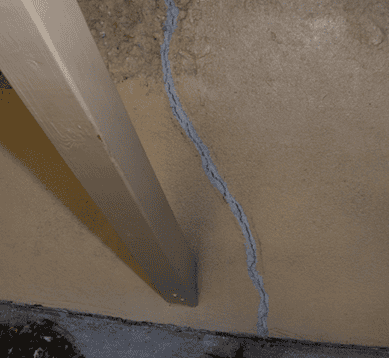
A crack caused by ground subsidence
Freezing is a common natural phenomenon in cold climates such as Quebec’s. When water in the ground freezes, it expands and can exert pressure on and lift foundations, which can lead to structural problems. Three factors are necessary for freezing action to occur:
- The presence of frost-susceptible soil (e.g., clay);
- Sufficient water content;
- Alternating periods of freezing and thawing.
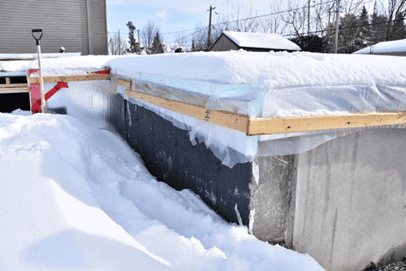
During reconstruction work following a disaster that occurs during the winter, one of the problems encountered is inadequate protection of foundations. To avoid having to demolish foundations that could have been reused due to freeze damage, it is necessary to implement adequate protective measures. It is therefore essential to fully understand the effects of freezing on foundations and to take appropriate preventive measures (adequate insulation and heating) to protect their integrity. By following the appropriate preventive measures and acting promptly, it is possible to minimize the negative impacts of freezing on a building’s foundations.
Our residential foundation package offers an inspection by a specialized expert of a residential building’s foundation following a fire, to determine whether the foundation can be salvaged for the building’s reconstruction. You can view the details here.