





At Origin, we’ve made continuing education one of our top priorities. Whether it’s for our experts, our administrative staff, our clients, or anyone else involved in property and casualty insurance, we’re convinced that innovation takes root in learning and knowledge sharing.
But where does this need for adult learning come from, and how is it linked to the development of professional skills in our field?
In this article, we’ll explore this topic by examining the origins of continuing education, the role it plays, and examples of how it’s applied in claims cases.
Continuing education means learning to anticipate the future of our profession by drawing inspiration from its beginnings. Enjoy the read!
Definition and Challenges
From a linguistic perspective, continuing education is defined as the professional continuation of an individual’s initial training. According to the Vitrine Linguistique, it “aims to update or expand, through appropriate educational means, theoretical and practical knowledge, and to develop cultural awareness, personal abilities, or professional skills.”
From a historical perspective, the need for professional development emerged with industrialization, scientific progress, the proliferation of technologies, and the intensification of international trade. According to Daniel W. Shannon, who served as Dean of Continuing Studies and Summer School at the University of Chicago from 1996 to 2015, his essay “A Selective Look at the History and Practice of Continuing Education,” also published in 2015, states:
“The modern adult education movement in the West began with changes in Great Britain nearly 200 years ago. Although continuing education was already widespread in England between the late 18th and early 19th centuries, there were no collective, organized efforts to provide education to the working class prior to the Industrial Revolution. “The fundamental need at that time was for a more skilled workforce capable of bringing a whole new level of work practices and skills” (free translation).
The rise of continuing education is therefore closely linked to major industrial transformations. However, these advances were largely based on the foundations of engineering and chemistry: two disciplines at the heart of innovation, which form the essence of our field. Similarly, in property and casualty insurance, when you really think about it, nothing is static. Materials, industrial processes, energy sources, and even climatic conditions require insurers to adapt at a breakneck pace. This constant transformation demands continuous adaptation and an understanding of new concepts intrinsically linked to the fields of engineering and chemistry. That is why it is essential in our industry to have access to continuing education and to offer it to our partners: it is the natural extension of a long-standing tradition and a demonstration of our credibility.
Even experts learn something new every day
Every member of our team actively invests in their professional development. Whether through internal training sessions—sometimes led by mentors specializing in a niche area of engineering or chemistry— sometimes through our younger colleagues, whose curiosity and recent learning help enrich the team’s collective knowledge base, through travel to attend training sessions across North America to stay abreast of the latest developments, or simply through weekly discussions, continuing education is truly part of our company’s DNA.
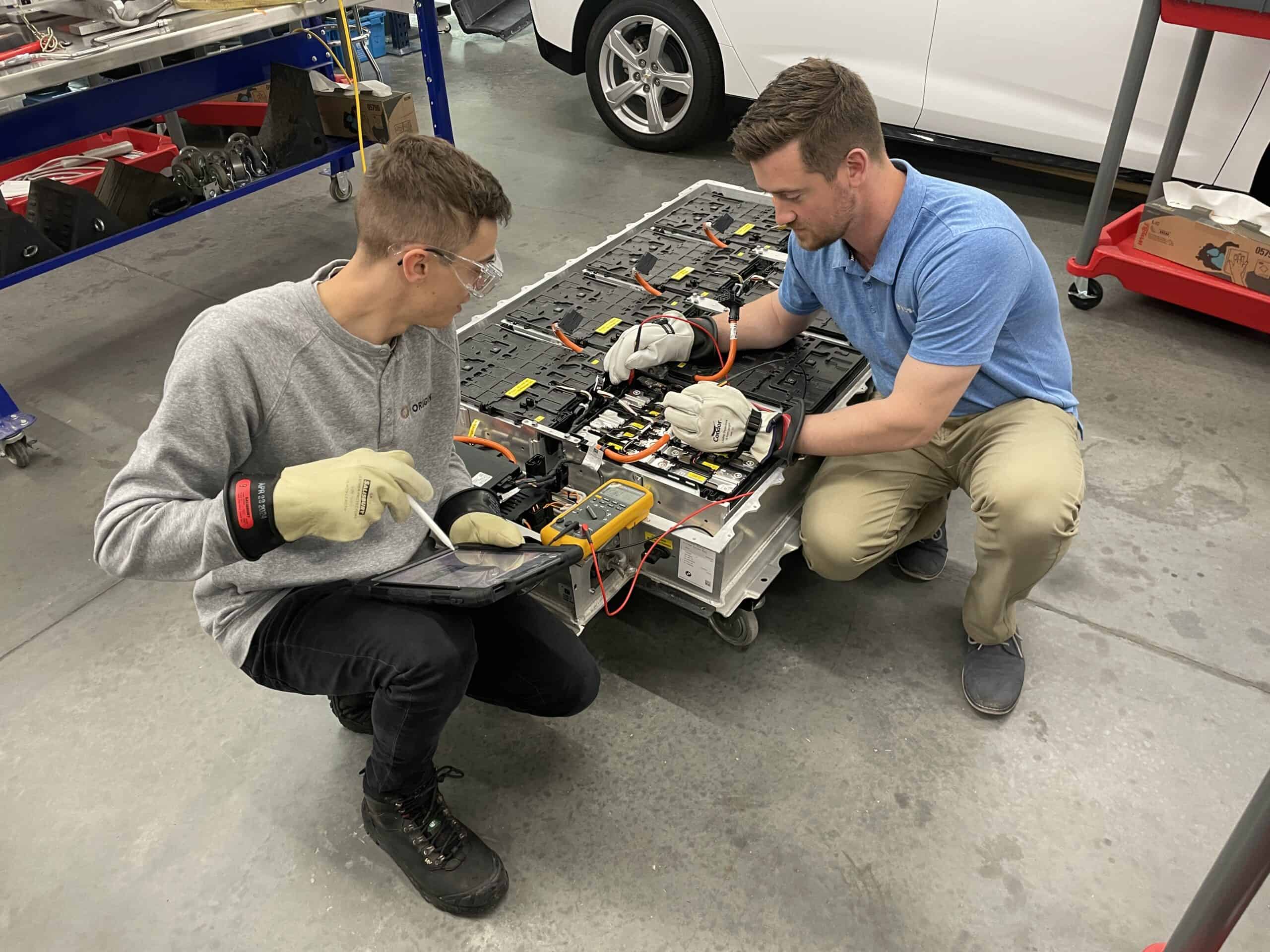
It is this blend of experience and innovation—of acquired knowledge and a thirst for learning—that enables our team to grow and tackle such a wide variety of situations in the field. By the way, did you know that our 36 UFC training courses are first and foremost tested and approved by our experts and administrative staff?
Case Studies to Better Anticipate Challenges
Let’s take a hypothetical example: a commercial building sustains major damage following a disaster in which several building materials appear to have reacted unusually to moisture. Without specialized knowledge on the subject, it might be difficult to determine whether the damage stems from a design flaw, an unsuitable formulated product, or the amplified effects of climate change. However, thanks to the training course “Property Damage Caused by Formulated Products,” participants can learn about the possible chemical interactions between certain products and water, enabling them to quickly steer their claims process—for example, by immediately arranging for the wood to be tested in a laboratory. The result: faster analysis, reduced investigation costs, and a much more robust expert report.
Another scenario: following an exceptional heat wave, a residential building exhibits concerning cracks in its concrete slab. Is this a pre-existing structural issue or a direct consequence of recent climate variations? The training course “Demystifying the Effects of Climate Change on Buildings” enables participants to incorporate these new realities into their analysis and to contextualize the damage.
These case studies, drawn directly from our training programs, therefore enable industry professionals to anticipate emerging issues, ask the right questions from the outset of a case, and steer the process in a clear direction in the event of a dispute.
A World of Knowledge Within Everyone’s Reach
At Origin, continuing education is a way to ensure excellence, foster innovation, and strengthen the trust of our clients and partners.
Our commitment is simple: to learn and to share. We invite you to explore our catalog of training courses—available online or in person—so you, too, can benefit. Because moving forward together means learning together.
Our training courses are easily accessible: it only takes a few clicks to register and start learning. It’s right here: https://formation.origin.expert.
– Catherine Dicaire, fire safety expert and Training Content Manager.