




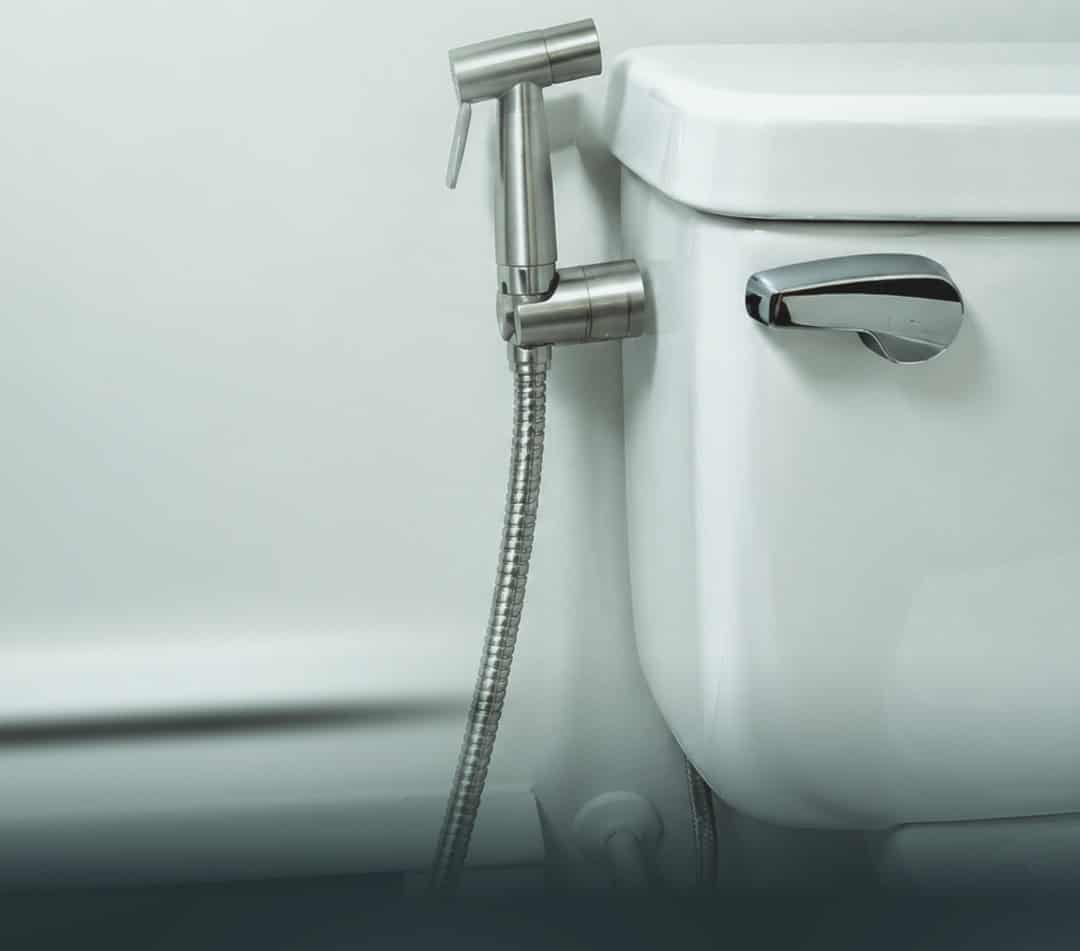
Once less common in North America, bidets are now much more prevalent in residential properties. Many of these devices are relatively affordable and marketed as products that can be installed directly on an existing toilet, sometimes by the users themselves.
The installation process does appear straightforward: shut off the water supply, add a fitting or supply line to the bidet, install the device, and then turn the water back on.
However, this seemingly minor modification introduces additional potential points of failure into a plumbing system that may be continuously subjected to water pressure.
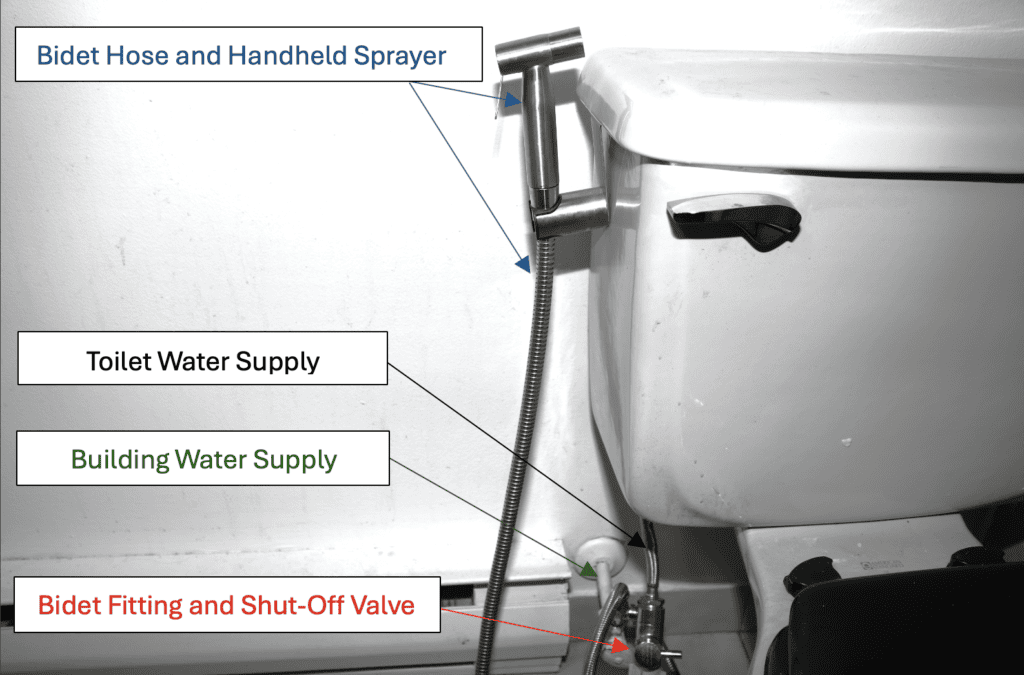
Installation: A Source of Stress That Should Not Be Overlooked
The plumbing fittings used with bidets are often relatively easy to assemble. However, overtightening can, among other things, deform a seal, damage plastic threads, or introduce significant stresses. One particular concern is that these stresses do not necessarily lead to immediate failure but may contribute to progressive failure, resulting in a leak several months or years after the original installation.
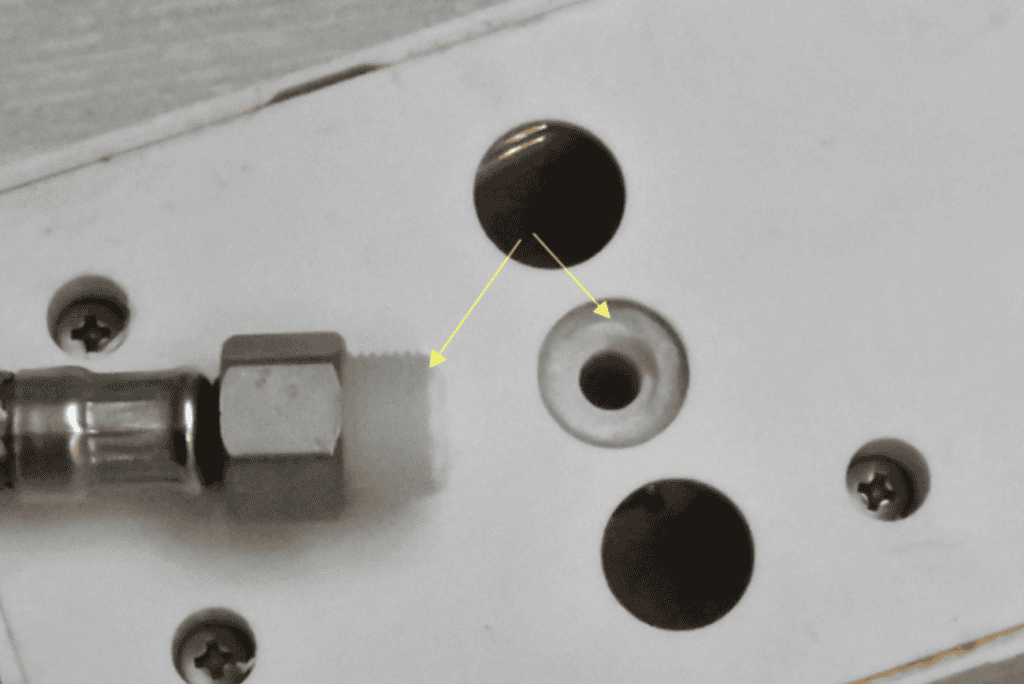
The geometry of the installation also plays a role. A supply line that is too short, sharply curved, or kinked near a fitting can create localized mechanical stresses greater than those normally anticipated in the design of the component.
Under Pressure… Even When Not in Use?
Bidets are generally connected directly to the building’s water supply system. Some of their components may therefore remain pressurized even when the device is not in use, which explains why the failure of a small component can cause significant water damage.
Furthermore, not all devices are designed to be used in the same way. Some manufacturers expressly state that the shut-off valve supplying the bidet must be closed after each use. In practice, users may be unaware of this instruction, forget it, or simply fail to follow it consistently.
Beyond compliance with the manufacturer’s instructions, this situation may also raise a design question: is it appropriate for a component connected to a domestic water supply system to require the user to take action after every use to prevent it from remaining pressurized?
Is a Product Available on the Market Always Compliant?
The short answer is: not necessarily.
Plumbing products are now readily available to the general public, particularly through online retailers. A product designed or marketed for multiple markets may therefore be sold in a jurisdiction with different regulatory requirements.
In Quebec, the relevant regulatory requirements are set out, in particular, in Chapter III – Plumbing of the Quebec Construction Code, which incorporates the National Plumbing Code of Canada 2020, together with Quebec amendments[1], or, to put it simply, the Plumbing Code.
The Plumbing Code includes requirements relating to the certification or approval of materials, fixtures, and equipment intended for plumbing installations.
For certain classes of bidets, the Plumbing Code requires compliance with ASME A112.4.2/CSA B45.16, “Personal Hygiene Devices for Water Closets”.
Among other things, this standard establishes requirements relating to performance criteria and backflow prevention to avoid contamination of potable water.
Depending on the installation configuration, other components may also be subject to their own standards. This is particularly the case for flexible supply lines sometimes provided with bidets, for which ASME A112.18.6/CSA B125.6 establishes specific requirements.
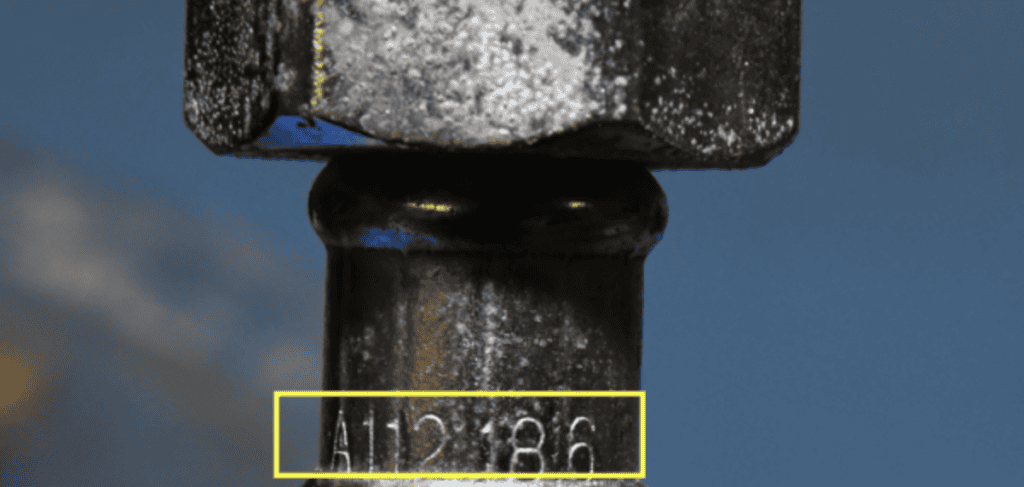
Why Is This Important?
Certification helps establish the minimum performance requirements that a component must meet. Although compliance with a standard does not guarantee that a product line will never experience failures, it allows actual conditions of use to be compared with the conditions for which the product was designed. Conversely, if no applicable certification or approval can be established, the component may not have been intended for sale or installation.
When Chemistry Comes into Play
A bidet and its associated components may incorporate several types of materials, including plastics, elastomers (rubbers), and metals. These materials must be designed to retain adequate properties throughout their service life.
However, potable water is not chemically pure. It contains various dissolved minerals and ions, as well as certain chemicals used in water treatment.
Materials used in plumbing should normally be selected for compatibility with this environment. Nevertheless, certain conditions may promote long-term degradation processes, such as corrosion of metallic components or embrittlement of certain polymeric materials.
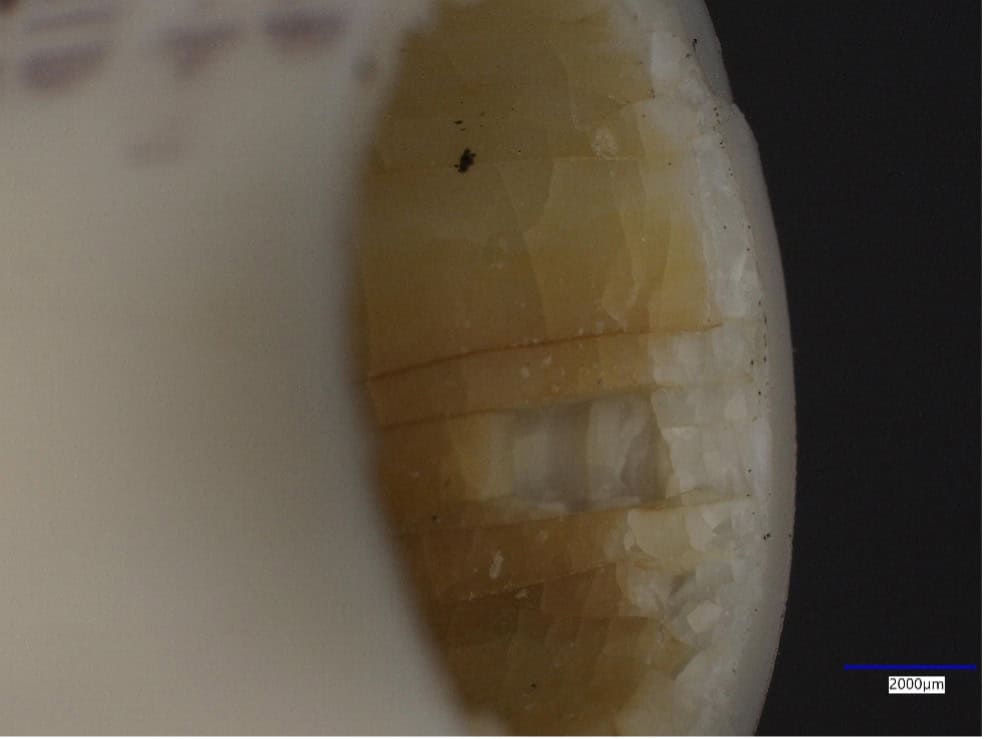
In addition, various household cleaning products may be stored in the bathroom and may react with these materials.
The question remains whether the component was unsuitable for its environment or whether the environment itself was problematic. In some cases, both factors may be involved.
What Can a Forensic Investigation Reveal?
The analysis of a failed component generally begins with a visual examination, particularly to document:
- the failure, crack, or source of the leak;
- the product’s brand and model, manufacturer or distributor, and certifications;
- the overall installation configuration, where possible;
- visual evidence relating to the failure.
When necessary, the examination may be supplemented by additional testing, such as microscopic examinations, chemical analyses, or other laboratory tests.
The ultimate objective is to distinguish between several broad categories of causes, namely a design or manufacturing defect, improper installation, deterioraton in service (under normal or abnormal conditions), external stress or intervention, or a combination of these factors.
This analysis can help identify the component(s) potentially responsible for the failure.
Before Removing the Component
It is, of course, normal to need to stop a leak quickly and restore the premises to their original condition following water damage. However, whenever possible, a few simple precautions can help preserve a significant amount of information.
It is particularly useful to photograph the installation before disassembly and retain all relevant components, not just the one that failed.
For example, retaining the entire bidet, even when only one hose appears to have failed, can help trace the product’s brand, identify its manufacturer or distributor, and determine whether the various components were part of the original assembly.
Therefore, when circumstances permit, involving a forensic expert early in the process can make a significant difference in your insurance claim.
[1] The applicable editions may vary depending on the year of installation.


