




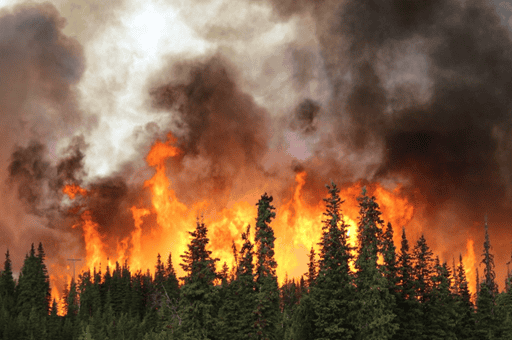
It is common to hear about natural disasters occurring with increasing frequency. They have a serious impact on public safety. One cannot help but think of the wildfires that struck Quebec in the summer of 2023, as well as those in other provinces, including Alberta and the Northwest Territories, or the ones that raged across the Hawaiian Islands. Beyond the climate-related and human tragedy, these catastrophic events also have repercussions on our daily lives—more specifically, on how we must learn to anticipate the number of climate-related disasters that may occur.
The Need for a New Approach
Catastrophe Indices and Quantification Inc. (CatIQ), a subsidiary specializing in catastrophic losses in Canada, published a study revealing that 2022 was the third-highest year for insured losses in Canadian history. Given the significant financial impact of this increase, it has become increasingly urgent that national codes be thoroughly revised. We are therefore talking about a comprehensive revision of the forecasting methodology for the following codes: the National Building Code, the Canadian Electrical Code, and the Canadian Highway Bridge Design Code. All are being reworked from the ground up. The goal? To develop greater resilience to climate change.
This reform will provide building and infrastructure designers with new codes based entirely on a brand-new predictive approach. In fact, since the creation of the national reference documents, the climate reference data used to guide designers’ work have been derived from historical climate data recorded by region. This means that all strength calculations used to design new structures are based on past values. It’s quite paradoxical, isn’t it? That is why the new national codes that will be developed will no longer use this outdated method, but rather mathematical models that represent future climate data based on forecasts.

The RCP Forecasting Method
From now on, new forecasts will be based on RCP (Representative Concentration Pathway) scenarios. These are plausible future scenarios of anthropogenic forcing—that is, the impacts of human activities—based on various combinations of projections that take into account population growth, economic activity, energy intensity, and socioeconomic development.
These projections provide an estimate of the amount of greenhouse gases (GHGs) that will be stored in the atmosphere from now until 2100. The increase in the concentration of stored GHGs is calculated based on rising temperatures. Indeed, as they accumulate, GHGs limit the amount of heat that can escape from the atmosphere. The projections therefore show an increase in this rate, which results from rising temperatures, which in turn leads to an increase in the frequency of natural disasters.
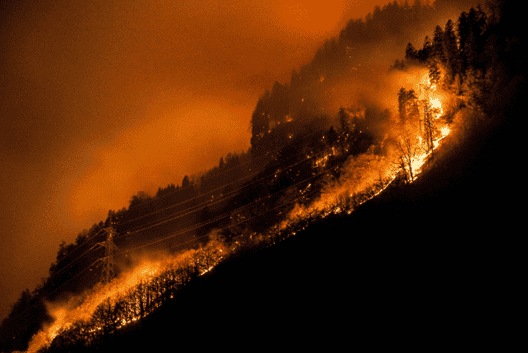
Did you know that global warming affects northern countries around the world the most? Canada is no exception. Studies show that Canada’s average temperature has risen more than twice as much as the global average since 1948. This rise is causing extreme heat, leading to more frequent and severe droughts and wildfires, such as those we experienced in Canada in the summer of 2023.
It has also been reported that precipitation has increased by an average of 20% across Canada, significantly raising the risk of flooding. Extreme cold temperatures, on the other hand, are less frequent, resulting in ly fewer days of freezing temperatures and thinner snow cover. Designs are thus affected, as rising temperatures and precipitation are the main factors reducing the resilience and durability of Canadian infrastructure. These impacts will not diminish, given the current increase in the frequency of extreme weather events that we are facing.
Objectives of the Reform
The change in the sources of reference climate data aims to make climate projections the norm in the design of buildings and infrastructure, so that we look to the future rather than relying on historical data that is not representative of what lies ahead.
The amendment to national codes therefore aims to strengthen the resilience of designs to meet the objectives of the national codes: safety, health, accessibility, protection of buildings against fire and structural damage, and environmental protection, while reducing long-term costs associated with disaster compensation. Presumably, this change will be reflected in the insurance sector through a reduction in claims and damages caused by unexpected natural disasters.
Climate change and the need to amend national codes are currently sensitive issues in the construction industry. However, the latest edition of the codes, published in 2020, still did not address climate resilience. It will not be until 2025 that national codes will incorporate these changes for the first time. It will, however, take until around 2030 for them to take effect. It follows, therefore, that the pace of changes to national codes poses a problem for insurance companies, as they are facing a rise in claims that will only continue to increase, with no relief expected for several years. It is therefore becoming increasingly urgent to accelerate the implementation of the new national codes in order to significantly increase resilience to climate change.
To entrust us with a new project or to request that a civil engineering expert contact you regarding a property damage claim, please feel free to contact us at info@origin.expert.