




In the field of mechanical engineering inspections, every detail counts. When it comes to detecting overheating, energy loss, or hidden defects, the thermal imaging camera stands out as the tool of choice. Thanks to its ability to translate temperature variations into precise images, it allows experts to observe the invisible and make an informed diagnosis without direct contact with the equipment. In this article, we’ll explore what a thermal camera is, the principles that guide its use in technical assessments, and a few concrete examples illustrating its value in the field.
A thermal camera is a device equipped with an infrared radiation sensor that converts the collected data into thermographic images.
What is infrared radiation?
All surfaces emit it: Infrared radiation is electromagnetic radiation that is invisible to the naked eye and emitted by any hot object. The hotter the object, the more intense the infrared radiation. It’s called infrared because its light spectrum lies beyond the red end of the spectrum—hence the name “infrared”!
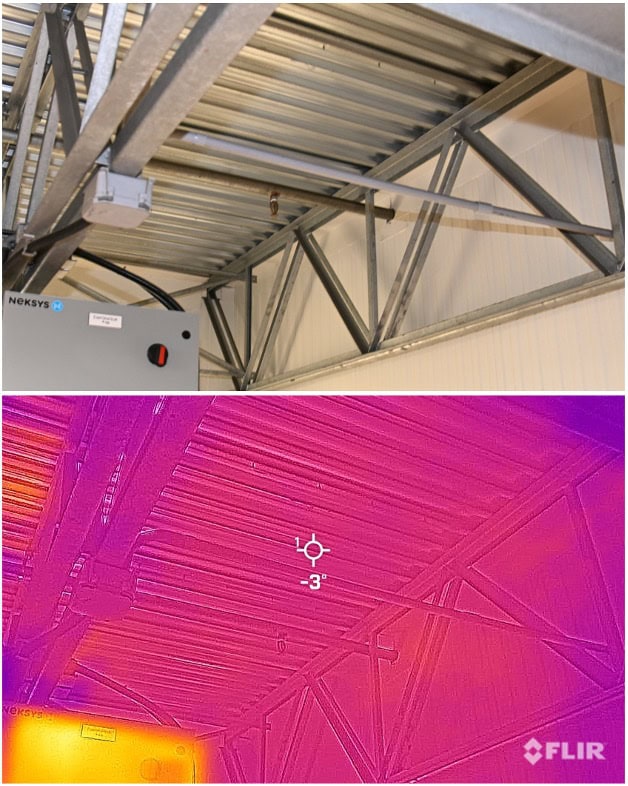
In the context we’re discussing here, it’s the difference in the intensity of this radiation that allows the thermal camera to visualize temperature variations. This non-destructive diagnostic tool proves particularly useful in the context of building mechanics assessments. Its effectiveness depends on several key parameters, such as the emissivity of materials, the reflectivity of surfaces, and a sufficient temperature difference between the anomaly and the surrounding environment to highlight defects. Overlaying infrared data with the visible image on the thermal camera creates a merged image to produce clear photographs where the colors facilitate the interpretation of different temperatures.
A tool that truly shines in expert assessments
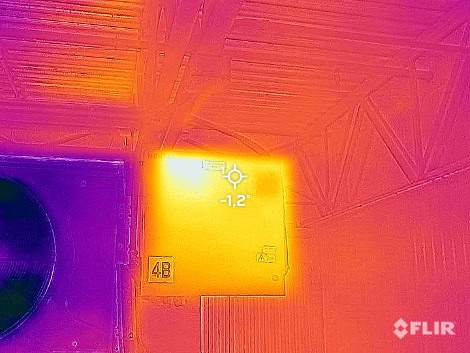
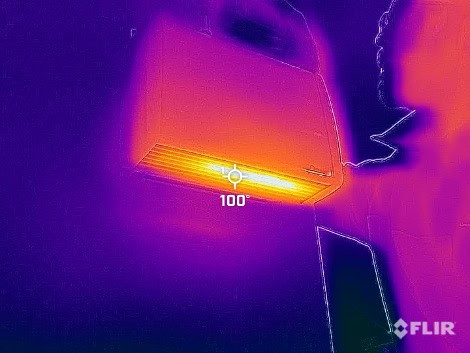
Why is the thermal imaging camera particularly relevant in post-disaster situations? Because it enables a rapid, non-destructive inspection, especially in cases where a source of heat or cold may be involved. Here are a few examples of expert assessments in which it plays a role:
- Assessing the extent of water damage (the presence of moisture, in particular, alters thermal conductivity);
- Determining the proximity of a cold area in the event of a frozen water pipe;
- Locating water leaks (saturated insulation, vapor barrier breaches) in roofs and walls;
- Determine the presence of insulation defects (insulation continuity, airtightness—such as cold air leaks—thermal bridges, and the insulation performance of a pipe, floor, wall, or ceiling);
- Identify hot spots or areas of renewed combustion following a fire;
- Identify abnormal overheating (loose connections, tripped circuit breakers, damaged motors, undersized wiring) in electrical components;
- Determine sources of heat, particularly in the event of an unexpected sprinkler activation.
A picture is worth a thousand words
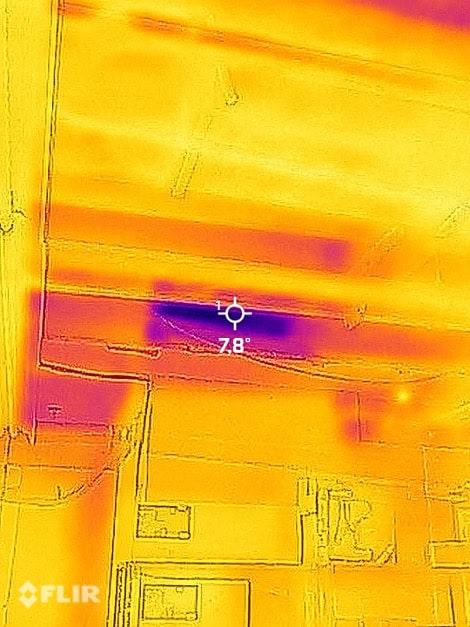
Let’s consider a case of water damage. Moisture often leaves areas that feel cooler than the rest of the surface. The reason is simple: wet areas conduct heat differently, and evaporating water cools the material. Thermal imaging then helps pinpoint the extent and severity of the damage. Another situation where the camera can be useful is when pipes burst due to freezing, which may be caused by a nearby source of cold air. On roofs and walls, thermal imaging helps locate leaks and thermal bridges, such as when insulation is waterlogged or missing. When it comes to electrical equipment, thermal imaging highlights abnormal temperatures caused by loose connections, overloaded circuit breakers, damaged motors, or undersized wiring.
Interpretation, Limitations, and Added Value of Infrared Thermography
However, the method has limitations: the camera does not “see” water itself, but rather its thermal effects. Metallic or shiny surfaces may sometimes produce misleading reflections. The absence of a sufficient temperature difference is also an issue to consider, as it can mask defects. The analysis is therefore primarily comparative (sound areas versus suspicious areas) and must be combined with measurements taken using other instruments. Above all, it remains essential to have a thorough understanding of how to use this technology.
The merged images (visible and infrared) are easier for those involved in a claims case (insurers, policyholders, contractors, etc.) to understand. All in all, thanks to infrared thermography technology, they can fully understand the extent of the damage, limit unnecessary demolition, and assess the quality of the repairs. When used properly and documented accurately, it is a powerful tool for speeding up decision-making after a disaster, reducing costs, and supplementing the findings of an expert assessment.
At Origin, our building mechanics experts use infrared thermography to support their on-site findings.